


Introduction
For a long time, people have trusted The New York Times for puzzles and word games, but in the last few years, it has grown a lot beyond just crosswords. Connections NYT is a daily word puzzle that makes players think critically, find hidden connections, and figure out ingenious patterns between words. It’s one of the most popular new games on the site. Connections NYT is more than just a guessing game; it has players employ logic, language skills, and lateral thinking, which makes it both fun and good for the brain.
This page tells you all you need to know about connections nyt, such as how it works, why it’s so popular, how to play well, and what sets it apart from other word games. This in-depth tutorial will help you understand the game better, whether you are new to it or play it every day.
What is Connections NYT?
Links The New York Times makes a daily word-association puzzle called NYT. In each puzzle, players have to find 16 words that are placed in a grid. The goal is to put these 16 words into four groups of four, with each group having a hidden link or theme.
It’s not always clear how the pieces fit together. Some are easy and straightforward, while others require complex thought, wordplay, or more than one meaning. Connections nyt is both easy and hard to get into because it has a good mix of easy and hard groups.
To finish the problem, players must find all four proper groups. The problem is that a lot of terms seem to fit into more than one category, which might make it easy to make mistakes if you’re in a hurry.
The Beginning and Growth of Connections NYT
Links The New York Times added NYT to its growing library of digital games. Wordle was such a big hit that there was a huge demand for new and interesting word puzzles. Connections got a lot of attention right away since it was both familiar and fresh.
Connections nyt is more interesting to a wider range of people than crossword puzzles because it focuses on how words are related to each other instead of on facts. Players don’t need to be experts, but they do need to be patient and curious. As time went on, the game gained a lot of everyday fans, and many players made it a part of their daily lives.
People like it because it’s easy to play, you can play it again and again, and it feels good to eventually find a clever or surprising connection.
How Connections NYT Works
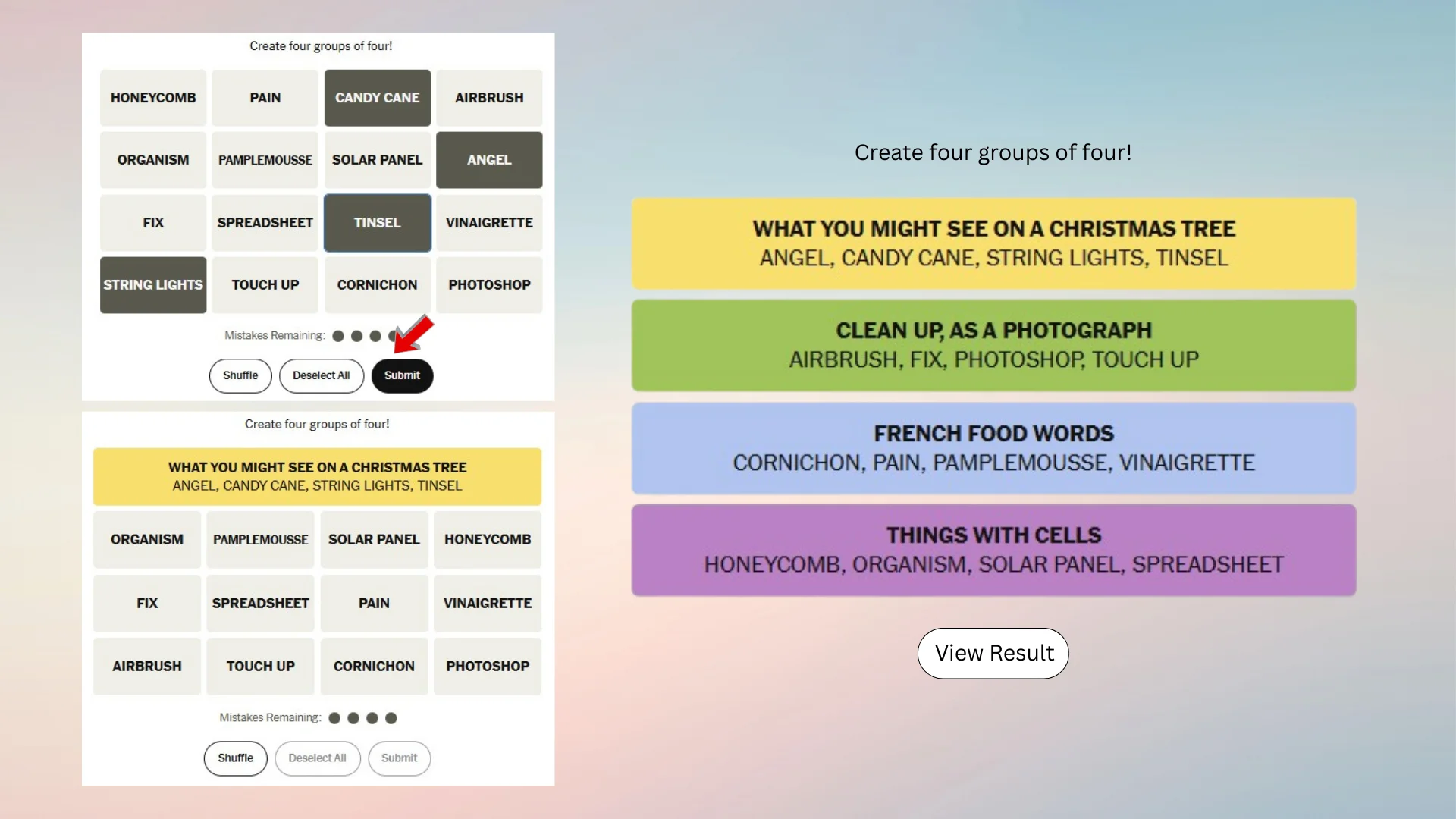
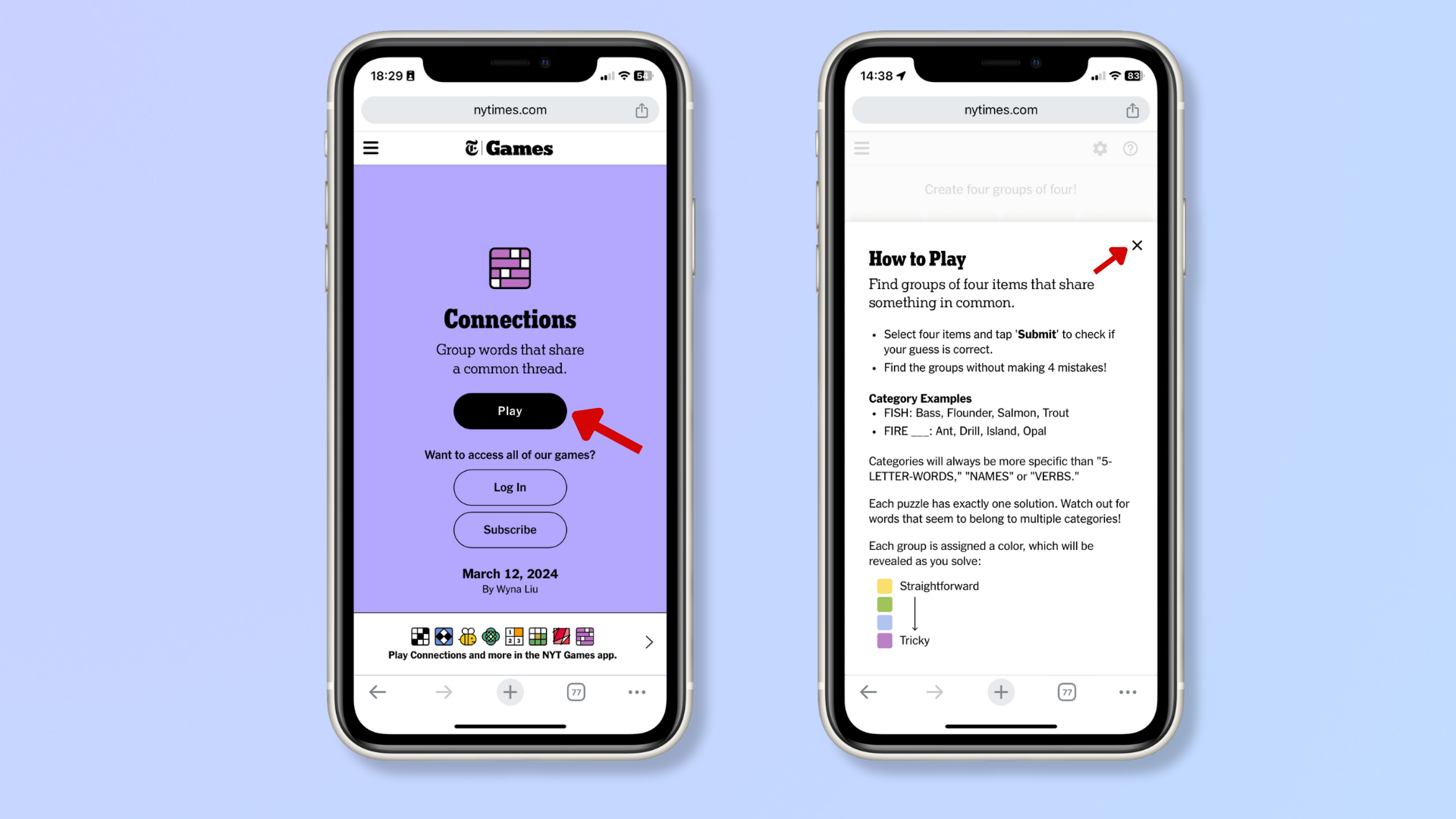
Players get a grid with 16 words on it every day. You need to put these words into four separate groups, each having four terms that are related to each other. When you think you’ve found the right group, pick the four words and send in your guess.
If the group is right, it is taken off the grid and marked as solved. The game counts it as a mistake if the group is wrong. Players can only make four mistakes, which puts pressure on them and makes them think about their choices.
The problem also has levels of complexity that are color-coded. The colors show how simple or hard each group is, however you can only see the color once you solve the group. This technique helps players figure out which connections were easy and which ones needed more thought.
Connections NYT: Rules and Limits
The regulations for connecting nyt are easy to understand but stringent. Players must follow these simple rules:
- Each word can belong to only one group.
- All four words in a group must share the same exact connection.
- You are allowed a maximum of four incorrect guesses.
- Once all four groups are solved, the puzzle is complete.
Guessing randomly is dangerous because there aren’t many mistakes. Players that do well use logic and pattern identification instead than trial and error.

How to Play Connections NYT in Steps
It pays to have a plan when you play connections nyt instead of just diving in.
Read all 16 words attentively at first. Some words may seem unrelated at first, but if you look more closely, you may notice patterns. Try to find clear groups, such things, actions, jobs, or themes.
Next, seek for words that go together in an obvious way. If you solve the easiest group first, it can make the rest of the puzzle easier by getting rid of distractions. It’s usually easier to study the words that are left once a group is deleted.
If the arrangement is hard to understand, use the shuffle feature. Changing the order of the phrases can assist your brain find new patterns and connections.
Make sure that all four terms really do have the same link before you make a guess. If you have any doubts about a word, think again before making a choice to avoid making a mistake.
Keep doing this until you’ve solved all four groups or you run out of tries.
The most common kinds of connections in the game
Links To keep puzzles interesting and new, NYT uses a lot of different kinds of relationships. Some typical ways to connect ideas are through synonyms, shared functions, categories, or themes that have to do with culture, language, or everyday life.
Some puzzles use wordplay, like words that change meaning when they are next to another word or words that have the same prefixes, suffixes, or hidden patterns. Some of the hardest connections are abstract, which means players have to think outside of the box.
Players might be more confident and flexible when they know these typical patterns.
Ways to get better at Connections NYT
It takes work to get better at connecting nyt, but several tips can help a lot.
One good way to do this is to get rid of obvious links early on. Taking away obvious categories makes things less complicated and helps you find the harder ones. Be careful with words that seem to fall into more than one category as another useful guideline. A lot of the time, these are meant to confound players.
Be aware of your mistakes. If a guess doesn’t work, don’t just try another random combination right away. Instead, think hard about why it didn’t work. This thought process frequently shows the right logic.
Players that play regularly have a feel for the puzzle’s style and the themes that keep coming up, which makes it easier to solve future challenges.
What makes Connections NYT so addicting
Connections NYT is interesting because it has a good balance. The game is short; it usually only takes a few minutes to play. But when you figure it out, it feels quite good. Every puzzle is a good workout for your brain without being too hard.
The daily release schedule also helps things stay the same. Players come back every day knowing they will encounter a new challenge, but one that fits well into their daily lives.
The most crucial thing is that the puzzle favors insight over speed. Players keep coming back because they love the moment when a hard connection suddenly makes sense.
Connections NYT Compared to Other Word Games
Connections NYT is different from word guessing games since it focuses on relationships and logic instead of spelling or vocabulary. There is no countdown, no need to finish quickly, and no need to compete with other people.
This is great for players who like to think about problems instead of reacting quickly. It also makes the game different from crosswords, which often rely on trivia or specific knowledge.
Connections NYT seems modern, flexible, and easy to get to, which makes it fun for a lot of various kinds of gamers at all ages.
Conclusion
Links NYT has swiftly become one of the New York Times’ most fun word puzzles. It makes players think deeply, find patterns, and use language in new ways by combining simple principles with smart design. Every day, the puzzles provide you a new chance to improve your reasoning skills while having fun with a tough mental challenge.
Connections nyt is the perfect mix of pleasure, challenge, and mental reward for people who play games casually or every day. With time and practice, the game gets easier and more fun, making a few minutes of play every day a habit worth continuing.
Read More:- Fun Crafts ThunderOnTheGulf – Creative Coastal Activities for All Ages