

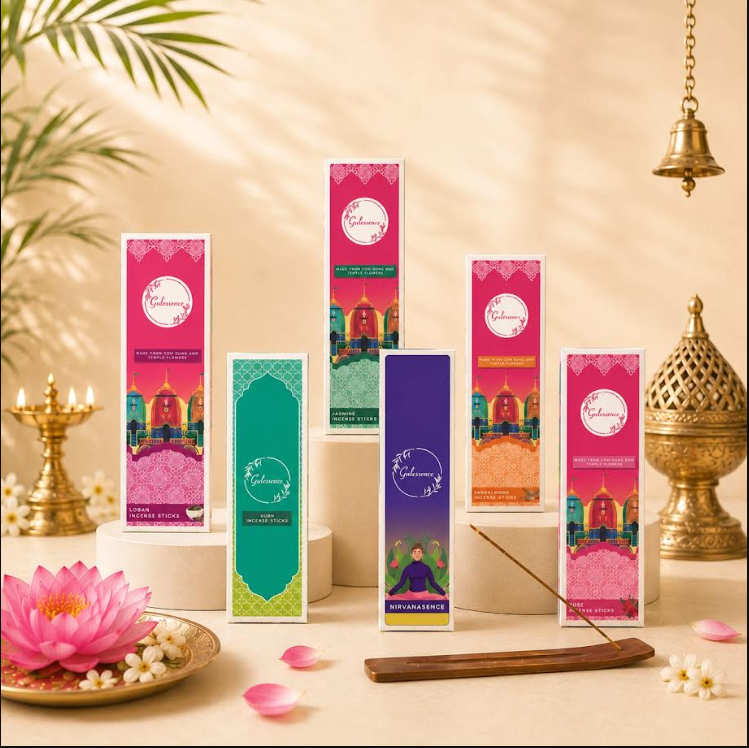

There is a quiet revolution happening in Indian homes. After decades of synthetic fragrance and charcoal-heavy incense sticks dominating the market, people are returning to something older, simpler, and more grounded. Cow dung agarbatti — incense sticks made from an ingredient that has been central to Indian ritual life for millennia — is finding its place again in modern pooja rooms, yoga spaces, and mindful homes across the country.
If you have come across the term and wondered what it actually means, whether it smells the way you fear it might, or why so many people are switching to agarbatti made from cow dung, this guide answers all of it.
What Is Cow Dung Agarbatti?
Cow dung agarbatti refers to incense sticks in which cow dung (gobar) is used as one of the primary base materials, typically combined with natural ingredients like wood powders, flower powders, organic herbs, and essential oils. The mixture is hand-rolled, dried naturally, and infused with fragrance — resulting in a stick that burns cleanly and evenly without the use of charcoal.
This is important: agarbatti made from cow dung is not a novelty product. It is a revival of a practice that predates the modern incense industry by centuries. In Ayurvedic tradition, cow dung has long been recognised for its natural antiseptic and purifying properties. It has been used in havan rituals, as a natural disinfectant in homes, and as a base for sacred objects precisely because of these properties.
The modern incense industry moved away from these traditional formulations in the 20th century, largely because charcoal was cheaper, easier to source, and produced consistent burn characteristics at scale. But what was gained in manufacturing efficiency was lost in quality — and now, both health-conscious consumers and tradition-minded households are driving demand for incense sticks made from cow dung back upward.
Why Cow Dung? Understanding the Science and the Tradition
The Ayurvedic and Vedic Case
In Vedic tradition, the cow is considered sacred not merely symbolically but practically. Every by-product of the cow — milk, ghee, urine (gomutra), and dung (gobar) — holds a specific place in Ayurvedic medicine and ritual practice.
Cow dung specifically has been documented in Ayurvedic texts for its fumigating properties. Burning it in a controlled way — which is what a cow dung agarbatti essentially does — releases compounds believed to purify the air and create a sattvic (pure, calm) atmosphere. This is why gobar has been central to havan and dhoop rituals for thousands of years.
The Scientific Perspective
Modern research has begun to explore what traditional practice long held to be true. Studies have found that burning cow dung produces compounds including phenols, which have antimicrobial properties. Some research from Indian agricultural and veterinary institutions has indicated that the smoke from burning cow dung may help reduce airborne pathogens in enclosed spaces.
It is worth noting that this research is ongoing and that agarbatti cow dung products are not medical devices — the claim here is not that lighting a stick cures anything. The point is that the ingredient is not just symbolic. There is a material reason why it has been used in purification rituals across Indian history, and why it remains meaningful today.
No — It Does Not Smell the Way You Think
This is the first question almost everyone asks. The answer is straightforwardly: no, incense sticks made from cow dung do not smell like raw dung. When properly processed, dried, and combined with natural fragrance ingredients, cow dung acts more like a neutral, slightly earthy base — similar in function to wood powder in conventional incense. The dominant fragrance in the finished stick comes from the essential oils and flower powders blended into the formulation.
A sandalwood cow dung agarbatti smells like sandalwood. A rose variant smells like rose. The gobar base contributes to the burn quality and the subtle earthiness underneath — the same quality that makes traditional Indian incense feel grounded and real rather than synthetic and sharp.
How Cow Dung Agarbatti Is Made
The making of agarbatti made from cow dung is a largely manual, craft-based process — which is one reason it disappeared from large-scale commercial production and is now associated with small, artisanal, and mission-driven producers.
The process typically begins with sourcing dung from indigenous Indian cow breeds (desi gai), which are considered to have the most beneficial properties in Ayurvedic tradition. The raw material is dried thoroughly, processed into a fine powder, and then combined with other natural ingredients — wood powders, herb extracts, flower powders from recycled temple offerings, natural binders like natural gum, and essential oils for fragrance.
The mixture is hand-rolled onto bamboo sticks or, in the case of bambooless variants, shaped without any stick at all. The sticks are then dried in natural air and sunlight, packaged, and dispatched.
This is not a factory process. It is closer to craft production, which is why brands making genuine cow dung agarbatti tend to employ women artisans working in small, supervised batches rather than running automated production lines.
The Environmental Angle: Why This Matters Beyond the Home
Incense sticks made from cow dung carry an environmental story that goes beyond the product itself.
India is home to the world’s largest cattle population, and cow dung management is a genuine challenge for rural communities. Using gobar productively — in biogas, in organic fertiliser, and in products like agarbatti — transforms what would otherwise be waste into economic value. For farming communities and for the artisans who make these products, there is a direct livelihood connection.
Additionally, most quality agarbatti cow dung producers source their flower ingredients from temple offerings that would otherwise be discarded into rivers or landfills. Flowers offered at temples each day run into several tonnes across India. Repurposing these flowers into incense is a circular supply chain that both honours the original offering and prevents organic waste from polluting waterways.
At Gulessence (www.gulessence.com), this is the supply chain behind every product. Temple flowers sourced from Jaipur’s mandirs, combined with cow dung and organic herbs, handcrafted by women artisans — the story of the product is inseparable from the product itself.
Who Should Use Cow Dung Agarbatti?
Cow dung agarbatti is particularly well-suited for:
- Daily pooja and ritual use: The Vedic connection makes it especially meaningful for traditional morning and evening prayer rituals.
- Havan and dhoop ceremonies: The fumigating and purifying properties align with the purpose of these ceremonies.
- Meditation and yoga: The grounded, earthy quality of the fragrance supports an inward, settled state of mind.
- Allergy-prone or health-conscious households: Because it is charcoal-free and made from natural ingredients, it is a gentler choice for homes where conventional incense causes irritation.
- Eco-conscious consumers: The circular supply chain and natural ingredients align with values around sustainability and conscious consumption.
Choosing the Right Cow Dung Agarbatti
As demand for incense sticks made from cow dung grows, so does the number of products making this claim. Here is what to look for when choosing:
Ingredient transparency. A genuine product will list its ingredients. Look for cow dung, natural wood powders, flower powders, herbs, and essential oils. Be cautious of products that claim to be natural but list DEP (diethyl phthalate) or synthetic fragrance oils.
Charcoal-free certification or claim. The whole point of choosing agarbatti cow dung products is to move away from a charcoal base. Verify this claim is actually made.
Source of dung. Products made from indigenous Indian cow breeds (desi gai) are considered more aligned with traditional Ayurvedic use than those using dung from hybrid or jersey cattle.
Fragrance quality. Smell the stick before burning. Natural essential oil-based fragrance has depth and subtlety. Synthetic fragrance tends to smell strong and flat — sometimes chemically sweet.
Frequently Asked Questions
Q1. Does cow dung agarbatti actually smell good?
Yes. When properly processed and combined with natural fragrances, cow dung agarbatti smells like its fragrance — sandalwood, rose, mogra, or whatever variety you choose. The gobar base contributes an earthy undertone, not an unpleasant smell.
Q2. Is agarbatti made from cow dung safe to use indoors?
Yes — and it is generally considered safer than conventional charcoal-based incense. Because it burns without a charcoal core, it produces lighter, cleaner smoke. Ensure some ventilation, use one stick at a time, and keep it a reasonable distance from where you are sitting.
Q3. What is the difference between cow dung agarbatti and regular agarbatti?
Regular agarbatti typically uses a charcoal base, which burns denser and is often paired with synthetic fragrance oils. Agarbatti cow dung uses gobar as the base material, producing a lighter burn and a more natural fragrance experience.
Q4. Can cow dung incense sticks be used for daily pooja?
Absolutely — and many people consider them more appropriate for daily pooja than commercial charcoal sticks, precisely because the ingredients are more aligned with traditional Vedic practice.
Q5. Where is Gulessence cow dung agarbatti made?
All Gulessence products, including our cow dung agarbatti range, are handcrafted in Jaipur by women artisans using temple flowers, cow dung from desi Indian cows, organic herbs, and pure essential oils. No charcoal. No synthetic fragrance. Shop online at www.gulessence.com.
Q6. Is incense made from cow dung sustainable?
Yes — it is one of the more sustainable incense options available. The raw material (gobar) is a by-product of cattle that would otherwise go to waste, and most quality producers also source flower ingredients from temple offerings rather than fresh-cut flowers.
Q7. How long does one cow dung agarbatti stick burn?
Depending on the formulation and length of the stick, most incense sticks made from cow dung burn for 20 to 45 minutes. Bambooless dhoop variants may burn slightly differently. Check specific product listings for burn time details.
Gulessence crafts charcoal-free, cow dung-based agarbatti, dhoop sticks, havan cups, and ritual wellness products from recycled temple flowers and organic ingredients — handmade by women artisans in Jaipur. Explore the full range at www.gulessence.com.